
Resumen de Noticias de Cubacidtelegram (CCT) – 11 de septiembre de 2025
Contenido:
1) Apagón nacional y convoyes militares en Cuba
En medio de un apagón nacional, el medio independiente La Tijera denunció que el régimen prioriza combustible para mover camiones militares con “material de guerra”, mientras millones permanecen sin electricidad. El reporte, difundido en Facebook, no precisó la ruta exacta del convoy, pero subrayó la contradicción entre la falta de combustible para el Sistema Eléctrico Nacional y la disponibilidad para logística represiva. La denuncia se inserta en un contexto de apagones recurrentes, precariedad alimentaria y transporte colapsado que alimentan el malestar social. Hasta ahora no hay versión oficial sobre la finalidad del movimiento militar ni explicación técnica que lo justifique durante la crisis, en la que el gobierno alega déficit de generación y carencias de combustible mientras la oposición denuncia manejo desigual de recursos energéticos.
Fuente: CubitaNOW / La Tijera (FB)
2) Derrumbe en Centro Habana expone crisis habitacional
Un derrumbe parcial en un edificio de la calle San Lázaro (entre Oquendo y Márquez González), en Cayo Hueso, dejó 14 personas afectadas. El inmueble, declarado inhabitable, cedió en un pasillo del primer piso. No hubo fallecidos ni heridos y las autoridades reubicaron a los afectados. El hecho ocurre durante un apagón general y se suma a colapsos recientes (Belascoaín 105, San Miguel), basura acumulada y estructuras con más de un siglo sin mantenimiento. La UNE reportó intentos de recuperar el SEN, pero La Habana sigue vulnerable. La combinación de ruina estructural, humedad, lluvias y falta de inversión agrava el miedo vecinal y la sensación de abandono, mientras continúan alertas sobre edificios en riesgo de colapso.
Fuente: CiberCuba
3) “Ya no fumigan contra el dengue”: denuncia formal (CID)
Expediente 004130082511 (11/08/2025). Nidia Vázquez, de La Habana del Este, denuncia ausencia de fumigación e insumos. Su hijo de 12 años contrajo dengue; en el Hospital Naval le sugirieron “patas de gallina” por falta de medicamentos. Señala abandono de inspecciones, abatización y auto‑focales, además de fosas desbordadas y drenajes fallidos que multiplican criaderos del Aedes aegypti. Solicita restablecer campañas, asegurar fármacos y reparar infraestructura. La Defensoría del Pueblo del CID respalda y remite a MINSAP, ANPP y organismos internacionales. El testimonio expone colapso operativo en control vectorial y atención clínica en plena crisis sanitaria y energética.
Fuente: cubacid.com (Defensoría del Pueblo CID) | Autor: Frank Correa (Defensor del Pueblo)
Enlace: https://cubacid.com/ya-no-se-fumiga-contra-el-dengue/
4) Detenido y liberado el escritor Ángel Santiesteban
La Seguridad del Estado detuvo por casi tres horas al escritor Ángel Santiesteban, confirmó la periodista independiente Camila Acosta. Un oficial le ordenó permanecer en casa “hasta que volviera la electricidad”; al negarse, fue conducido a una patrulla. Es el tercer episodio de reclusión domiciliaria en cuatro días, en medio de colapsos energéticos. Santiesteban ha denunciado la intromisión del régimen en la Gran Logia de Cuba. Condenado en 2013 a cinco años por textos críticos en su blog “Los hijos que nadie quiso”, enfrenta hostigamiento recurrente. Otros activistas reportan vigilancia y prohibiciones de salida. El caso ilustra el uso del apagón como pretexto para controles arbitrarios sobre voces críticas y el clima de represión sostenida.
Fuente: Martí Noticias | Autor: Yolanda Huerga
Enlace: https://www.martinoticias.com/a/detienen-al-escritor-cubano-angel-santiesteban-/425023.html
5) Alquileres caros y sin amparo legal en Cuba
Inquilinos en La Habana enfrentan rentas crecientes (Vedado: 100–300 USD) sin contratos formales, con desalojos repentinos y alta incertidumbre. La inflación y el alza del dólar presionan precios; muchos propietarios evitan la legalidad para esquivar impuestos y controles, pese a marcos como la Ley 65 y el DL‑35/2018 que permiten arrendar con autorización. A la par, el mercado de compraventa está deprimido: casas que costaban 500 mil USD en 2015 hoy se ofertan en 200 mil o menos, con poca demanda y sin crédito bancario. La crisis habitacional y la emigración condicionan decisiones: jóvenes prefieren alquilar antes que comprar. La falta de inversión y la burocracia desalientan la regularización del alquiler y dejan a inquilinos desprotegidos.
Fuente: 14yMedio
Enlace: https://www.14ymedio.com/cuba/renta-casas-cuba-precios-inaccesibles_1_1117881.html
6) Divisas al alza: euro y dólar en máximos históricos
El mercado informal encadenó cuatro jornadas de subidas: dólar a 415 CUP, euro a 469 CUP y MLC estable en 195 CUP, según elTOQUE (10/09/2025, 05:00). El repunte comenzó el 7 de septiembre; el euro marca récord y se consolida como divisa más cara y refugio demandado. El dólar, más gradual, pasó de 410 a 415 CUP en cuatro días. La MLC permanece lejos de los niveles de julio (210–225 CUP), reflejando desconfianza. La escalada presiona precios internos, alquileres y transacciones cotidianas, refuerza expectativas de devaluación y complica la planificación económica familiar. En un contexto de crisis energética y productiva, el mercado paralelo sigue siendo referencia para fijación de precios y salarios reales.
Fuente: CiberCuba (datos: elTOQUE)
7) Siguen los cortes pese al “restablecimiento” del SEN
Cubanos de varias provincias dijeron a Martí Noticias que continúan sin electricidad horas después del anuncio oficial de reconexión del SEN. En La Habana, el servicio regresó y volvió a cortarse; en Las Tunas hubo restablecimientos breves; en Artemisa y Matanzas persisten apagones prolongados con pérdidas de alimentos. El Ministerio de Turismo aseguró operación normal de hoteles con plantas, mientras hospitales suspendieron cirugías no urgentes y algunos tenían combustible para menos de 24 horas. Médicos advierten que sin electricidad no es posible brindar servicios dignos. La percepción pública cuestiona prioridades del régimen y exige rendición de cuentas sobre inversiones, combustible y mantenimiento del sistema eléctrico.
Fuente: Martí Noticias
Enlace: https://www.martinoticias.com/a/cubanos-aseguran-que-muchos-lugares-continuan-apagados/425056.html
8) “Secuestran” Green Card en Camagüey: exigen 5.000 USD
Una familia en Camagüey denunció el robo de una Green Card y un pasaporte cubano, presuntamente en el aeropuerto Ignacio Agramonte. Tras el aviso en redes, perfiles anónimos publicaron la foto de la residencia y exigieron 5.000 USD para devolverla. Casos similares ya habían sido reportados (pedían 4.000 USD). La familia acudió a la PNR y se dirigirá a la embajada de EE. UU. Abogados recomiendan no pagar rescates y solicitar un documento de viaje en el consulado. Las reiteradas denuncias sugieren un patrón delictivo que aprovecha la vulnerabilidad de viajeros cubano‑estadounidenses y la limitada efectividad de las pesquisas en la isla.
Fuente: Martí Noticias
Enlace: https://www.martinoticias.com/a/secuestran-otra-green-card-en-cuba-piden-5-000/425051.html
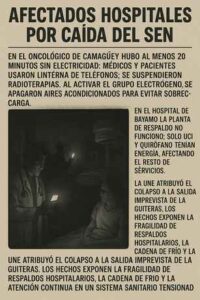
9) Apagón nacional: caos en hospitales
Varios hospitales se vieron afectados por la caída del SEN. En el Oncológico de Camagüey hubo al menos 20 minutos sin electricidad: médicos y pacientes usaron linternas de teléfonos; se suspendieron radioterapias. Al activar el grupo electrógeno, se apagaron aires acondicionados para evitar sobrecarga. En el Hospital de Bayamo la planta de respaldo no funcionó; solo UCI y quirófano tenían energía, afectando el resto de servicios. La UNE atribuyó el colapso a la salida imprevista de la Guiteras. Los hechos exponen la fragilidad de respaldos hospitalarios, la cadena de frío y la atención continua en un sistema sanitario tensionado por escasez de recursos y mantenimiento deficiente.
Fuente: ADN Cuba
10) Activista Yamilka Lafita (“Lara Crofs”), sitiada y amenazada
La activista Yamilka Lafita permanece bajo cerco policial desde el miércoles y enfrenta amenaza de arresto si sale de casa, denunció el periodista José Luis Tan. Un agente identificado como “Mijaín” impuso prohibición de salida y advirtió sobre un posible “acto de repudio”. Un vecino que intentó fotografiar patrullas fue intimidado. En su Facebook, Lafita increpó a los agentes por el “arresto domiciliario” sin causa y recibió respuestas intimidatorias. Detenida a finales de agosto, reportó lesiones. La vigilancia sostenida se enmarca en una ola represiva intensificada tras colapsos eléctricos y protestas, y apunta a disuadir la denuncia pública y la organización ciudadana.
Fuente: ADN Cuba
Enlace: https://adncuba.com/es/derechos-humanos/activista-lara-crofs-lleva-dos-dias-sitiada-y-bajo-amenazas
11) Prisoners Defenders: 1.185 presos políticos (agosto)
Prisoners Defenders reporta 13 nuevos presos políticos en agosto y cuatro salidas de lista (tres por cumplimiento, una por destierro forzoso: Aymara Nieto). En 12 meses suman 152 incorporaciones (promedio 13/mes) y desde julio de 2021 a agosto de 2025 registran 1.882 prisioneros políticos. Denuncian procesos sin debido proceso, cargos fabricados y penas severas para silenciar el disenso. Señalan 472 presos con patologías graves y 41 con trastornos mentales sin tratamiento adecuado. El informe también resalta peticiones fiscales desproporcionadas contra manifestantes pacíficos y la instrumentalización de la ley para castigar opiniones y publicaciones en redes.
Fuente: Prisoners Defenders / Cubalex
Enlace: https://prisonersdefenders.org
12) Díaz-Canel presume “tiempo récord”, persisten apagones
Miguel Díaz‑Canel celebró en X la “recuperación en tiempo récord” del SEN y agradeció a Energía y Minas y a la UNE, culpando al embargo y al envejecimiento del parque termoeléctrico. Sin embargo, extensas zonas siguieron sin servicio estable. Marrero habló de “estrategia para enfrentar” la caída, no para prevenirla. El colapso ocurrió el miércoles a las 9:14 a. m. tras la salida de la Guiteras; la reconexión se apoyó en Mariel y otras unidades. En menos de un año suman cinco apagones nacionales. La población padece pérdidas de alimentos, daños en equipos y parálisis laboral y educativa, mientras la narrativa oficial choca con la experiencia cotidiana.
Fuente: CiberCuba
13) Exnuera de Fidel habla sobre Sandro Castro
Idalmis Menéndez, exnuera de Fidel Castro, ofreció una entrevista donde relata aspectos de la vida de Sandro Castro, su educación y dinámicas familiares que, según ella, influyeron en su conducta pública. Aborda privilegios, patrones de crianza y el contraste entre la retórica oficial y estilos de vida de herederos del poder. La pieza se suma a testimonios que cuestionan la coherencia entre discurso revolucionario y prácticas de la élite. Aunque es un testimonio personal y sujeto a controversias, aporta contexto sobre redes familiares y su impacto simbólico en la percepción ciudadana y en el desgaste de la legitimidad del régimen.
Fuente: YouTube
Enlace: https://youtu.be/pPt9CoR6tfY
14) México ampliará acuerdos con Cuba pese a críticas
La presidenta mexicana Claudia Sheinbaum confirmó que continuará contratando médicos cubanos y ampliará convenios con La Habana, incluyendo la compra de medicamentos como el destinado al pie diabético. La decisión desafía denuncias de explotación laboral, el rechazo de gremios médicos y advertencias de Estados Unidos sobre el posible financiamiento del régimen. El gobierno defiende la cooperación por déficit de especialistas y abastecimiento; críticos señalan opacidad contractual, retención salarial y violaciones laborales. El anuncio reaviva el debate ético y de eficacia de estos programas y añade tensión a la agenda EE. UU.–México en materia de derechos humanos y gobernanza.
Fuente: YouTube
Enlace: https://youtu.be/tSF3XIsr2FU
15) Testimonio sobre caso de atropellamiento múltiple en La Habana
La exesposa de Mario Pontolillo, italiano residente en Cienfuegos imputado por un atropello masivo en La Habana, habló por teléfono con el periodista Mario Pentón. Expresó conmoción y aportó detalles de contexto personal del acusado. El caso mantiene alta sensibilidad pública por la gravedad de los hechos, el involucramiento de un extranjero y expectativas de justicia. La entrevista agrega perspectiva humana, pero la investigación oficial y el debido proceso determinarán responsabilidades. Víctimas y familiares demandan transparencia, mientras la opinión pública sigue el caso en un clima de desconfianza hacia la información institucional y judicial.
Fuente: YouTube (Mario Pentón)
Enlace: https://youtu.be/bz9OCTmtq8c
16) “Nos están matando lentamente”: denuncia de Mailín Rodríguez
Mailín Rodríguez, madre de tres hijos y esposa de un preso político del 11J, publicó un testimonio desde Holguín (11/09/2025) denunciando un sistema “fallido y corrupto” que destruye vidas con represión, hambre y apagones. Acusa a medios internacionales de minimizar la crisis por “corrupción y manipulación” y reclama libertad para los presos políticos. Su relato mezcla dolor personal, precariedad de servicios (salud, prisiones) y hastío social, reflejando el impacto psicológico y material de la crisis. La utilización de términos como “genocidio” expresa indignación moral, aunque no se corresponda con definiciones jurídicas estrictas.
Fuente: Facebook (post público)
Enlace: https://www.facebook.com/share/p/17D4grQ8Y5/
17) Segundo día sin luz: persistencia del apagón nacional
Tras la salida “inesperada” de la termoeléctrica Antonio Guiteras (Matanzas), Cuba vive su segundo día con gran parte del país a oscuras. Autoridades informaron avances: 18 subestaciones y 208 circuitos restablecidos en La Habana (73% de la capital), reconexión de 41 hospitales y ocho sistemas de agua. Aun así, 628.861 clientes seguían sin servicio. Usuarios denuncian cortes extendidos, “circuitos privilegiados” y escepticismo ante partes oficiales. La UNE menciona incorporación de unidades (Santa Cruz, Mariel, Nuevitas, Céspedes) y motores Energas, pero la precariedad continúa. Plantas envejecidas, mantenimiento insuficiente y déficit de combustible sostienen una crisis que afecta agua, conservación de alimentos y vida cotidiana, alimentando la indignación social.
Fuente: CubaNet
Enlace: https://www.cubanet.org/tras-casi-24-horas-de-apagon-nacional-gran-parte-de-cuba-sigue-a-oscuras
18) Díaz-Balart agradece a Hammer su “solidaridad con el pueblo cubano”
El congresista cubanoamericano Mario Díaz‑Balart se reunió con Mike Hammer, encargado de Negocios de la embajada de EE. UU. en La Habana, y le agradeció su defensa de la seguridad nacional estadounidense y su solidaridad con el pueblo cubano. Destacó sus recorridos por el país y encuentros con activistas, familiares de presos, líderes religiosos y sociedad civil, pese a acoso del régimen (#ConCubanosDeAPie). Un funcionario del Departamento de Estado respaldó su labor bajo la política de “Estados Unidos Primero”, exigiendo rendición de cuentas al régimen por su influencia maligna en la región. La dinámica refleja apoyo diplomático a la disidencia y tensiones bilaterales persistentes.
Fuente: Martí Noticias
19) Nuevo juicio contra activista de Pinar del Río
El preso político Manuel de Jesús Rodríguez García enfrentará un nuevo juicio el 15 de septiembre en el Tribunal Provincial de Pinar del Río. La fiscalía ahora pide cuatro años por “atentado”, una figura más grave que el “desacato” comunicado en junio. Su madre denuncia suspensión arbitraria de visitas y negación de alimentos; la esposa ha sido amenazada con cárcel y pérdida de la patria potestad, con participación de Atención a Menores. Activista de la Alianza Democrática Pinareña, fue condenado en 2016 por protestas. La CIDH otorgó medidas cautelares en 2021. El caso ilustra escalamiento punitivo y hostigamiento familiar como mecanismo disuasorio.
Fuente: CubaNet
20) La Guiteras sale del sistema horas después de sincronizar
La termoeléctrica Antonio Guiteras, la mayor de Cuba, volvió a salir del SEN pocas horas después de su arranque, tras el apagón masivo. Aunque directivos reportaron más de 15 labores técnicas (lavados, ajustes, hermeticidad), el bloque no sostuvo operación estable. El vaivén revela la fragilidad del sistema: ciclos de “arranque” y “caída” que dejan a hogares entre el calor, la pérdida de alimentos y la imposibilidad de cocinar o trabajar. La narrativa oficial de “recuperación récord” se desvanece ante la inestabilidad crónica. Sin inversión estructural, repuestos y combustible, cada reconexión deviene alivio momentáneo seguido de frustración social y económica.
Fuente: CiberCuba
Te esperamos en Instagram: cuba.cid

ENERGY COLLAPSE: CHAOS IN HOSPITALS (9) CCT Summary 09-11-25
Summary of Cubacidtelegram (CCT) News – September 11, 2025
1) Nationwide blackout and military convoys in Cuba
Amid a nationwide blackout, independent outlet La Tijera denounced that the regime prioritizes fuel to move military trucks with “war material,” while millions remain without electricity. The report, shared on Facebook, did not specify the convoy’s exact route but highlighted the contradiction between the lack of fuel for the National Electric System and the availability for repressive logistics. The complaint comes amid recurring blackouts, food shortages, and collapsed transportation that fuel social unrest. So far, there is no official version about the purpose of the military movement or technical explanation that justifies it during the crisis, in which the government alleges generation deficit and fuel shortages while the opposition denounces unequal management of energy resources.
Source: CubitaNOW / La Tijera (FB)
Link: https://noticias.cubitanow.com/amp/apagn-nacional-en-cuba-mientras-el-rgimen-mueve-camiones-militares-con-materia-de-guerravideo
2) Building collapse in Centro Habana exposes housing crisis
A partial collapse in a building on San Lázaro Street (between Oquendo and Márquez González), in Cayo Hueso, left 14 people affected. The building, declared uninhabitable, gave way in a first-floor hallway. There were no deaths or injuries, and the authorities relocated those affected. The incident occurred during a nationwide blackout and adds to recent collapses (Belascoaín 105, San Miguel), accumulated garbage, and century-old structures without maintenance. UNE reported attempts to recover the SEN, but Havana remains vulnerable. The combination of structural ruin, humidity, rains, and lack of investment worsens neighborhood fear and sense of abandonment, while alerts continue about buildings at risk of collapse.
Source: CiberCuba
Link: https://eu.cibercuba.com/noticias/2025-09-11-u1-e42839-s27061-nid310723-oscuridad-miedo-derrumbe-golpea-vecinos-centro-habana
3) “No more dengue fumigation”: formal complaint (CID)
Case File 004130082511 (08/11/2025). Nidia Vázquez, from La Habana del Este, denounces absence of fumigation and supplies. Her 12-year-old son contracted dengue; at the Naval Hospital they suggested “chicken feet” due to lack of medicine. She points out abandonment of inspections, larviciding and self-checks, as well as overflowing pits and failed drains that multiply Aedes aegypti breeding sites. She requests to restore campaigns, ensure medicines and repair infrastructure. The CID Ombudsman supports and sends to MINSAP, ANPP and international organizations. The testimony exposes operational collapse in vector control and clinical care in the middle of a health and energy crisis.
Source: cubacid.com (CID Ombudsman) | Author: Frank Correa (Ombudsman)
Link: https://cubacid.com/ya-no-se-fumiga-contra-el-dengue/
4) Writer Ángel Santiesteban detained and released
State Security detained writer Ángel Santiesteban for almost three hours, confirmed independent journalist Camila Acosta. An officer ordered him to stay home “until the electricity returned”; when he refused, he was taken in a patrol car. This is the third episode of house detention in four days, amid energy collapses. Santiesteban has denounced regime interference in the Grand Lodge of Cuba. Convicted in 2013 to five years for critical texts in his blog “Los hijos que nadie quiso,” he faces recurring harassment. Other activists report surveillance and exit bans. The case illustrates the use of blackouts as a pretext for arbitrary controls on critical voices and a climate of sustained repression.
Source: Martí Noticias | Author: Yolanda Huerga
Link: https://www.martinoticias.com/a/detienen-al-escritor-cubano-angel-santiesteban-/425023.html
5) Expensive rentals without legal protection in Cuba
Tenants in Havana face rising rents (Vedado: 100–300 USD) without formal contracts, with sudden evictions and high uncertainty. Inflation and the rising dollar push prices; many landlords avoid legality to evade taxes and controls, despite frameworks such as Law 65 and DL‑35/2018 that allow renting with authorization. At the same time, the buying/selling market is depressed: houses that cost 500,000 USD in 2015 are now offered for 200,000 or less, with little demand and no bank credit. The housing crisis and emigration condition decisions: young people prefer renting rather than buying. Lack of investment and bureaucracy discourage rental regularization and leave tenants unprotected.
Source: 14yMedio
Link: https://www.14ymedio.com/cuba/renta-casas-cuba-precios-inaccesibles_1_1117881.html
6) Currencies rise: euro and dollar at record highs
The informal market recorded four consecutive days of increases: dollar at 415 CUP, euro at 469 CUP, and MLC stable at 195 CUP, according to elTOQUE (09/10/2025, 05:00). The rise began September 7; the euro sets a record and consolidates as the most expensive and demanded refuge currency. The dollar, more gradual, went from 410 to 415 CUP in four days. The MLC remains far from July levels (210–225 CUP), reflecting distrust. The escalation pressures domestic prices, rents and everyday transactions, reinforces devaluation expectations and complicates household economic planning. In a context of energy and production crisis, the parallel market continues to be the reference for price and real wage setting.
Source: CiberCuba (data: elTOQUE)
Link: https://videos.cibercuba.com/noticias/2025-09-10-u1-e207888-s27061-nid310648-cuarta-jornada-consecutiva-alza-divisas-cuba-euro
7) Power cuts persist despite “restoration” of SEN
Cubans from several provinces told Martí Noticias they remain without power hours after the official announcement of SEN reconnection. In Havana, the service came back and went out again; in Las Tunas there were brief restorations; in Artemisa and Matanzas prolonged blackouts persist with food losses. The Ministry of Tourism assured normal hotel operation with plants, while hospitals suspended non-urgent surgeries and some had fuel for less than 24 hours. Doctors warn that without electricity it is not possible to provide decent services. Public perception questions regime priorities and demands accountability for investments, fuel and maintenance of the electric system.
Source: Martí Noticias
Link: https://www.martinoticias.com/a/cubanos-aseguran-que-muchos-lugares-continuan-apagados/425056.html
8) Green Card “kidnapped” in Camagüey: 5,000 USD demanded
A family in Camagüey reported the theft of a Green Card and a Cuban passport, allegedly at Ignacio Agramonte airport. After the post on social networks, anonymous profiles published the residence photo and demanded 5,000 USD to return it. Similar cases had already been reported (asking for 4,000 USD). The family went to the PNR and will go to the U.S. embassy. Lawyers recommend not paying ransoms and requesting a travel document at the consulate. The repeated complaints suggest a criminal pattern that exploits the vulnerability of Cuban-American travelers and the limited effectiveness of investigations on the island.
Source: Martí Noticias
Link: https://www.martinoticias.com/a/secuestran-otra-green-card-en-cuba-piden-5-000/425051.html
9) Nationwide blackout: chaos in hospitals
Several hospitals were affected by the fall of the SEN. At the Camagüey Oncology Hospital there were at least 20 minutes without electricity: doctors and patients used phone flashlights; radiotherapies were suspended. When the generator group was activated, air conditioners were turned off to avoid overload. At the Bayamo Hospital, the backup plant did not work; only ICU and operating room had power, affecting the rest of the services. UNE attributed the collapse to the unforeseen outage of Guiteras. The events expose the fragility of hospital backups, cold chain and continuous care in a health system strained by resource shortages and poor maintenance.
Source: ADN Cuba
Link: https://adncuba.com/es/tendencias/colapso-del-sistema-energetico-en-cuba-provoco-caos-en-los-hospitales
10) Activist Yamilka Lafita (“Lara Crofs”), besieged and threatened
Activist Yamilka Lafita has been under police siege since Wednesday and faces arrest threats if she leaves her home, journalist José Luis Tan reported. An agent identified as “Mijaín” imposed a ban on leaving and warned of a possible “act of repudiation.” A neighbor who tried to photograph patrol cars was intimidated. On her Facebook, Lafita confronted agents for the “house arrest” without cause and received intimidating responses. Detained at the end of August, she reported injuries. The sustained surveillance is part of an intensified repressive wave after electrical collapses and protests, aimed at deterring public denunciation and citizen organization.
Source: ADN Cuba
Link: https://adncuba.com/es/derechos-humanos/activista-lara-crofs-lleva-dos-dias-sitiada-y-bajo-amenazas
11) Prisoners Defenders: 1,185 political prisoners (August)
Prisoners Defenders reports 13 new political prisoners in August and four removals from the list (three for serving sentences, one for forced exile: Aymara Nieto). In 12 months they total 152 additions (average 13/month) and from July 2021 to August 2025 they register 1,882 political prisoners. They denounce trials without due process, fabricated charges and harsh sentences to silence dissent. They point out 472 prisoners with serious pathologies and 41 with mental disorders without adequate treatment. The report also highlights disproportionate prosecutorial requests against peaceful demonstrators and the instrumentalization of law to punish opinions and posts on social media.
Source: Prisoners Defenders / Cubalex
Link: https://prisonersdefenders.org
12) Díaz-Canel boasts of “record time,” blackouts persist
Miguel Díaz‑Canel celebrated on X the “record-time recovery” of the SEN and thanked Energy and Mines and UNE, blaming the embargo and aging thermoelectric plants. However, extensive areas remained without stable service. Marrero spoke of a “strategy to confront” the outage, not to prevent it. The collapse occurred Wednesday at 9:14 a.m. after Guiteras went offline; reconnection relied on Mariel and other units. In less than a year there have been five nationwide blackouts. The population suffers food losses, damage to equipment and work and school paralysis, while the official narrative clashes with everyday experience.
Source: CiberCuba
Link: https://videos.cibercuba.com/noticias/2025-09-11-u1-e208933-s27061-nid310781-diaz-canel-asegura-sistema-electrico-nacional
13) Fidel’s ex-daughter-in-law talks about Sandro Castro
Idalmis Menéndez, Fidel Castro’s ex-daughter-in-law, gave an interview where she recounts aspects of Sandro Castro’s life, his education and family dynamics that, according to her, influenced his public behavior. She addresses privileges, upbringing patterns and the contrast between the official rhetoric and the lifestyle of the power heirs. The piece adds to testimonies questioning the coherence between revolutionary discourse and elite practices. Although it is a personal and controversial testimony, it provides context about family networks and their symbolic impact on public perception and regime legitimacy.
Source: YouTube
Link: https://youtu.be/pPt9CoR6tfY
14) Mexico to expand agreements with Cuba despite criticism
Mexican President Claudia Sheinbaum confirmed that she will continue hiring Cuban doctors and expand agreements with Havana, including the purchase of medicines such as those for diabetic foot. The decision defies allegations of labor exploitation, rejection from medical unions and U.S. warnings about possible regime financing. The government defends the cooperation due to shortage of specialists and supplies; critics point to contractual opacity, wage retention and labor violations. The announcement revives the ethical and effectiveness debate of these programs and adds tension to the U.S.–Mexico agenda on human rights and governance.
Source: YouTube
Link: https://youtu.be/tSF3XIsr2FU
15) Testimony on multiple run-over case in Havana
The ex-wife of Mario Pontolillo, an Italian resident of Cienfuegos charged for a massive hit-and-run in Havana, spoke by phone with journalist Mario Pentón. She expressed shock and provided personal context details about the accused. The case remains highly sensitive due to the gravity of the events, the involvement of a foreigner and expectations of justice. The interview adds a human perspective, but the official investigation and due process will determine responsibilities. Victims and relatives demand transparency, while public opinion follows the case in a climate of distrust toward institutional and judicial information.
Source: YouTube (Mario Pentón)
Link: https://youtu.be/bz9OCTmtq8c
16) “They are killing us slowly”: Mailín Rodríguez’s complaint
Mailín Rodríguez, mother of three and wife of a political prisoner of 11J, published a testimony from Holguín (09/11/2025) denouncing a “failed and corrupt” system that destroys lives with repression, hunger and blackouts. She accuses international media of downplaying the crisis due to “corruption and manipulation” and demands freedom for political prisoners. Her account mixes personal pain, service precariousness (health, prisons) and social exhaustion, reflecting the psychological and material impact of the crisis. The use of terms like “genocide” expresses moral outrage, although it does not strictly match legal definitions.
Source: Facebook (public post)
Link: https://www.facebook.com/share/p/17D4grQ8Y5/
17) Second day without power: national blackout persists
After the “unexpected” shutdown of the Antonio Guiteras thermoelectric plant (Matanzas), Cuba is living its second day with much of the country in darkness. Authorities reported progress: 18 substations and 208 circuits restored in Havana (73% of the capital), reconnection of 41 hospitals and eight water systems. Even so, 628,861 customers were still without service. Users denounce extended cuts, “privileged circuits” and skepticism towards official reports. UNE mentions incorporation of units (Santa Cruz, Mariel, Nuevitas, Céspedes) and Energas engines, but precariousness continues. Aging plants, insufficient maintenance and fuel shortages sustain a crisis that affects water, food preservation and daily life, fueling social outrage.
Source: CubaNet
Link: https://www.cubanet.org/tras-casi-24-horas-de-apagon-nacional-gran-parte-de-cuba-sigue-a-oscuras
18) Díaz-Balart thanks Hammer for his “solidarity with the Cuban people”
Cuban-American congressman Mario Díaz‑Balart met with Mike Hammer, U.S. Embassy chargé d’affaires in Havana, and thanked him for defending U.S. national security and his solidarity with the Cuban people. He highlighted Hammer’s tours around the country and meetings with activists, relatives of prisoners, religious leaders and civil society, despite regime harassment (#ConCubanosDeAPie). A State Department official backed his work under the “America First” policy, demanding accountability from the regime for its malign influence in the region. The dynamic reflects diplomatic support for dissent and persistent bilateral tensions.
Source: Martí Noticias
Link: https://www.martinoticias.com/a/mario-diaz-balart-se-reune-con-hammer-y-le-agradece-su-solidaridad-con-el-pueblo-cubano-/425065.html
19) New trial against activist from Pinar del Río
Political prisoner Manuel de Jesús Rodríguez García will face a new trial on September 15 at the Pinar del Río Provincial Court. The prosecution now requests four years for “assault,” a more serious charge than the “contempt” announced in June. His mother denounces arbitrary suspension of visits and denial of food; the wife has been threatened with prison and loss of parental authority, with participation of Child Welfare. Activist of the Alianza Democrática Pinareña, he was convicted in 2016 for protests. The IACHR granted precautionary measures in 2021. The case illustrates punitive escalation and family harassment as a deterrent mechanism.
Source: CubaNet
Link: https://www.cubanet.org/autoridades-programan-nuevo-juicio-contra-activista-opositor-de-pinar-del-rio
20) Guiteras goes offline hours after synchronization
The Antonio Guiteras thermoelectric plant, Cuba’s largest, went offline again just hours after its restart, following the massive blackout. Although managers reported more than 15 technical tasks (cleanings, adjustments, sealing), the unit did not maintain stable operation. The back-and-forth reveals the fragility of the system: cycles of “start-up” and “shutdown” that leave households between heat, food loss and inability to cook or work. The official narrative of “record recovery” fades in the face of chronic instability. Without structural investment, spare parts and fuel, each reconnection becomes a momentary relief followed by social and economic frustration.
Source: CiberCuba
Link: https://eu.cibercuba.com/noticias/2025-09-12-u1-e208933-s27061-nid310792-sale-sistema-electrico-termoelectrica-guiteras-pocas


Deja tu comentario