

Español, English, Français, Italiano


1- Lech Walesa Urges Cubans to “Take Advantage” of Trump but Warns He Will Not Bring Freedom
Lech Walesa, Nobel Peace Prize laureate and former president of Poland, urged Cuban exiles to “take advantage” of Donald Trump to promote change in Cuba, but emphasized that the U.S. president will act according to American interests, not Cuban ones. Speaking at the Cuban Diaspora Museum in Miami, he compared the current moment to Poland’s experience and recalled how his movement capitalized on favorable historical circumstances. He warned that a rapid victory could carry risks, including potential internal fracture. Walesa also referenced his conversation with María Corina Machado, questioning her decision to hand her Nobel medal to Trump “too quickly.”
Source: Diario de Cuba (EFE)
2- Laura Pollán and the Peoples Who Forget Their History
The text marks the 78th anniversary of Laura Pollán’s birth, founder of the Ladies in White, and defends her legacy as an instrument of historical memory in a possible transition context. Pollán is portrayed as an ordinary citizen who transformed the pain of the 2003 Black Spring into organized, peaceful civic resistance, confronting repression with silence and dignity. The piece warns that no authoritarian system collapses by inertia and that freedom requires organization, ethics, and firmness. It argues that a transition without memory risks repeating mistakes and compromising democratic development. The article links her example to the continued work of the Ladies in White and highlights Laura Labrada Pollán as a living testament to that legacy.
Source: CubaCID
3- Lawmakers Call for Raúl Castro to Be Prosecuted Over Brothers to the Rescue Shootdown
Several members of Congress, led by Mario Díaz-Balart, María Elvira Salazar, and Carlos Giménez, asked President Donald Trump to file formal charges against Raúl Castro for the 1996 shootdown of two civilian aircraft belonging to Brothers to the Rescue, which killed four people, including three U.S. citizens. In a letter, they urged the Department of Justice to review the case, consider international alerts, and examine evidence linking Castro to the chain of command, including a recorded communication and statements by Fidel Castro. They also called for reviewing commercial and financial licenses benefiting Cuban state entities as part of strengthening accountability measures.
Source: Martí Noticias
4- Aid to Cuba: Criticism of the “Humanitarian” Assistance Boric Will Send to the Regime
In a letter to the editor, Mijail Bonito, a Cuban-Chilean lawyer, questions the Chilean government’s decision to send humanitarian aid to Cuba, arguing that channeling resources through mechanisms influenced by the Cuban state ultimately “oxygenates the tyranny.” He contends that while the humanitarian intention may be shared, the real issue lies in how the aid is administered and where it ultimately ends up. He states that the United Nations system coordinates deliveries alongside the Cuban government, making it impossible to prevent diversion or political control. Bonito proposes an alternative model inspired by direct channels used by the United States, involving the Catholic Church and Caritas to monitor distribution and ensure assistance reaches ordinary citizens rather than party structures.
Source: El Mercurio (Chile)
5- With Cuba Collapsing, the Regime Seeks Tourists Even in Cambodia
The article describes the Cuban government’s attempt to attract tourism from Cambodia through a memorandum of understanding and potential “familiarization trips,” amid a sharp sector downturn. The strategy unfolds alongside hotel closures, travel advisories, and airline withdrawals, underscoring an industry in crisis. Analysts cited argue that the debacle stems not only from external pressures but also from GAESA’s control and inefficient investments that have suffocated the economy and deteriorated key services. Cuba is said to have fallen out of major tour operators’ portfolios, while perceptions of logistical instability and systemic collapse reduce demand. The piece concludes that pursuing distant markets may be yet another symbolic gesture unlikely to reverse structural decline.
Source: Diario de Cuba
6- Russia Launches Evacuation Flights from Cuba Excluding Cuban Nationals
Following the announcement that regular flights would be suspended starting February 24, Russian airlines initiated special operations to evacuate Russian tourists from Cuba. Reports indicate that thousands of Russian visitors remain on the island, with multiple flights scheduled between Varadero and Moscow, as well as one from Havana. These outbound evacuation flights reportedly exclude Cuban nationals, although a later flight is expected to transport Cubans from Russia back to the island. Nordwind joined the operation with additional flights from Varadero and Cayo Coco. The measure unfolds amid a broader fuel crisis at Cuban airports, which has already affected Canadian airlines and led to Belarus suspending connections, while Cayman Airways warned of possible cancellations.
Source: Diario de Cuba
7- Holguín Prosecutor’s Office Justifies Pretrial Detention of El4tico Creators
The Provincial Prosecutor’s Office of Holguín defended the pretrial detention imposed on Ernesto Ricardo Medina and Kamil Zayas Pérez, creators of the political audiovisual project El4tico, who were arrested by State Security. Authorities claim they are being investigated for “propaganda against the constitutional order” and “incitement to commit crimes,” alleging that their online content encouraged changing Cuba’s constitutional system and defamed state institutions. While the official statement promises due process, the report highlights contradictions with constitutionally recognized freedom of expression. The NGO Cubalex denounced irregularities during the search and arrest, including the alleged refusal to present a warrant. If convicted, the young creators could face up to nine years in prison.
Source: Diario de Cuba
8- Fuel Crisis Lengthens Miami Lines for Shipments to Cuba and Paralyzes Services on the Island
Long lines have formed in South Florida as Cuban exiles attempt to send food and medicine to relatives, while Cuba’s fuel shortage complicates logistics and tightens shipping restrictions. Agencies have suspended frozen products, eliminated home deliveries, and limited shipments to one package per person. Recipients must now collect packages at designated points despite transportation difficulties and rising costs within Cuba. In Camagüey, banks operate manually with reduced hours, and pension payments have been reorganized. The shortage has also hit cultural life, including the indefinite suspension of the Havana International Book Fair and cancellations at the Karl Marx Theater. Experts warn that without new oil shipments, the crisis could worsen significantly in the coming weeks.
Source: Diario de Cuba
9- Fire at Ñico López Refinery Raises Alarm in Havana
A fire at Havana’s Ñico López refinery produced visible columns of smoke across the city, triggering widespread concern on social media and in local reporting. According to state journalist Lázaro Manuel Alonso, the blaze was reportedly controlled in less than 20 minutes, although firefighters continued extinguishing and cooling isolated hotspots. Radio communications cited in the report placed the incident around 3:40 p.m. and indicated no need for reinforcement crews. No official information was immediately released regarding injuries or the cause of the fire, nor whether fuel storage facilities were affected. Given the refinery’s strategic importance to the capital’s energy supply, the incident heightened anxiety amid an already fragile national energy situation.
Source: CubaNet
10- Hemodialysis Patients in Cuba Denounce Lack of Transport, Supplies, and Stable Electricity
Patients dependent on hemodialysis and their families warn that the fuel crisis has paralyzed medical transport, forcing many to reach treatment centers on their own despite frequent blackouts and unstable services. Testimonies indicate that, despite official assurances that essential healthcare would remain unaffected, there is a shortage of fuel for taxis, medical supplies, and personnel. Some patients report paying high transportation costs. Hospitals have offered admission as an alternative for those unable to travel, but doctors caution that prolonged hospitalization increases infection risks, especially amid shortages of sterile materials. Reports also mention deficits of dialysis filters, iron treatments, blood for transfusions, and adequate nutrition, placing lives at serious risk.
Source: CubaNet / Martí Noticias
11- Russia Says It Will Help Cuba but Provides No Details; Chile Confirms Aid via UNICEF
Russian Deputy Foreign Minister Sergei Ryabkov reiterated that Moscow will provide material assistance to Cuba but again avoided specifics, stating that options depend on evolving circumstances. The report suggests caution to avoid escalating tensions with the United States and mentions concerns over maritime risks for shipments. Meanwhile, Chile confirmed humanitarian aid channeled through UNICEF from a national anti-hunger fund, with President Gabriel Boric criticizing the tightening of U.S. sanctions. The decision sparked political debate in Chile, with opponents calling it support for a dictatorship. Mexico also announced additional aid shipments, while the United Nations criticized unilateral sanctions for harming food, health, and water systems and urged their removal.
Source: 14ymedio
12- United Kingdom Warns of Critical Situation in Cuba While Cuban Embassy Promotes Tourism “Normality”
Cuba’s embassy in the United Kingdom claimed that the tourism sector remains fully operational, highlighting independent energy systems in hotels and guaranteed supplies. However, the UK Foreign Office warned of prolonged blackouts, severe fuel shortages, disruptions to water and communications, and strict limits on gasoline and diesel sales. British authorities also noted jet fuel shortages affecting airport operations, leading some airlines to adjust routes or suspend services. Additionally, routine medical treatments have reportedly been postponed, and shortages of basic medicines persist. The report underscores the clash of narratives: while London urges caution and preparation for disruptions, Cuban officials promote stability to preserve a vital source of state revenue.
Source: CiberCuba
13- United States Imposes Visa Restrictions on “El Necio” for Alleged Harassment of Diplomats
The United States imposed visa restrictions on Cuban pro-government journalist Pedro Jorge Velázquez, known as “El Necio,” for alleged involvement in harassment campaigns against U.S. diplomatic personnel in Cuba. Reports indicate he shared sensitive content related to Chargé d’Affaires Mike Hammer, including images of diplomatic vehicles and license plates. The measure follows a public warning from Deputy Secretary of State Christopher Landau, who stated that Washington knows the identities of those involved in intimidation and will respond accordingly. Sanctions reportedly include visa cancellations, permanent inadmissibility, and revocation of pending immigration processes. U.S. officials affirmed that intimidation tactics will not prevent diplomats from engaging with Cuban citizens.
Source: CiberCuba / Martí Noticias (Mario J. Pentón)
14- Young Cubans Defend “Make Cuba Great Again” Cap as Symbol of Tolerance and Freedom
A controversy over a red cap reading “Make Cuba Great Again” evolved into a broader debate on pluralism and freedom of expression. Young content creators, alongside influencer Elieser “El Bayardo,” argued that a truly free Cuba requires intellectual maturity and acceptance of differing views. In a widely shared video, they stated that freedom begins in the mind and warned against replicating censorship under new symbols. While some critics objected to similarities with Donald Trump’s slogan, the participants emphasized that the real issue is coexistence with diverse opinions. They stressed that tolerance does not mean endorsing abuse but allowing expression without fear, insisting that genuine freedom eliminates intimidation rather than imposing uniformity.
Source: CiberCuba
15- Activists Denounce School Violence in Cuba and Criticize UNICEF’s Approach
The Cuban Observatory of Academic Freedom (OLA) reported ethical, moral, and physical deterioration in Cuban schools, citing rising violence and everyday corruption. The organization attributes part of the crisis to ideological indoctrination replacing humanist pedagogy, compounded by economic decline and mass migration. Examples include student assaults, a reported school homicide, drug circulation, and corrupt practices such as exchanging food or phone credits for better grades. OLA also criticized pressure to achieve 100 percent promotion rates, forcing teachers to pass students regardless of performance. The group accused UNICEF of using cautious language and overlooking political context, arguing that operational constraints imposed by the Cuban government limit independent evaluation and reduce meaningful impact.
Source: Diario de Cuba
16- Energy “Contingency” Threatens to Shut Down What Remains of Cuban Tourism
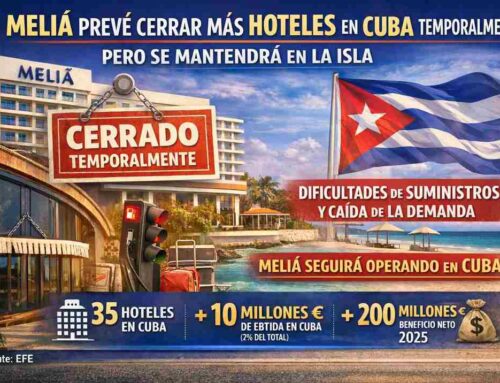
The report describes hotel closures during peak season, particularly in Cayo Santa María, with guests relocated and workers sent home without clear timelines. Permanent employees may receive partial salaries, while temporary staff face unpaid suspensions. Fuel shortages affect power generation and employee transportation, leading to week-long on-site shifts in some hotels. Official data show a sustained decline in tourism, with 1.81 million arrivals in 2025—well below previous years. Additional closures have occurred in Cayo Coco, Varadero, and Holguín, alongside reduced operations by international chains and complaints from tourists about blackouts and service disruptions. Authorities aim to prioritize revenue-generating sectors, but the tourism bubble appears increasingly unsustainable amid logistical collapse.
Source: elTOQUE
17- Economist Emilio Morales Says Cuban Regime May Not Last Until Mid-2026
Economist Emilio Morales argues that Cuba’s political and economic model has entered a terminal phase, with limited capacity to sustain itself in the coming months. He cites an energy crisis, persistent inflation, declining foreign income, shrinking hard currency reserves, and deteriorating public services. Morales contends that partial reforms have failed to restore growth or confidence and that dependence on remittances and informal dollarization deepens inequality and weakens legitimacy. He also notes reduced financial backing from traditional allies and limited access to international credit. Although his assessment reflects an independent viewpoint, Morales insists that current indicators point toward an unsustainable trajectory and the likelihood of profound structural transformation in the near future.
Source: CubaNet (via CubaTNow)
18- U.S. Coast Guard Intercepts Tanker Linked to Oil Shipments to Cuba
The United States Coast Guard intercepted the tanker Ocean Mariner south of Haiti after detecting a suspicious course change near the Windward Passage, a strategic maritime route between Cuba and Hispaniola. The vessel reportedly departed from Barranquilla and had recently transported oil to Cuba amid the island’s energy crisis. While no official details were released about the inspection’s outcome, the incident occurs amid renewed U.S. pressure on fuel supplies to Havana, including scrutiny of shipping companies and insurers. Although maritime patrols are officially aimed at combating trafficking, analysts suggest heightened monitoring of energy trade. Caribbean governments have voiced concerns over humanitarian and regional stability implications.
Source: CubaTNow (Mario Pentón)
19- Fire Controlled at Ñico López Refinery Amid Ongoing Fuel Shortages
Cuban authorities reported that the fire affecting a storage yard at Havana’s Ñico López refinery was brought under control without injuries and that operations continued normally. Officials stated that unused materials burned and that processing areas were not impacted. The incident intensified concerns about the country’s fragile energy infrastructure, already strained by prolonged blackouts, equipment failures, and insufficient funds to import fuel. The report contextualizes the refinery’s limited operating capacity and notes its proximity to densely populated areas and prior environmental risks. It also recalls the 2022 Matanzas supertanker base disaster as a reminder of vulnerabilities within Cuba’s petroleum infrastructure during a broader national energy emergency.
Source: Not specified in provided text
20- Mariela Castro in Leadership of “Humanitarian” Flotilla to Cuba Sparks Double Standard Criticism
The report states that the Nuestra América flotilla, promoted by the International Progressive coalition, includes Mariela Castro Espín—National Assembly deputy, director of CENESEX, and daughter of Raúl Castro—within its advisory leadership. Her role is described as strategic rather than symbolic, shaping the coalition’s direction. Critics argue that the mission emphasizes an anti-embargo narrative while avoiding denunciations of repression within Cuba. The article references figures such as Jeremy Corbyn and solidarity groups aligned with the Cuban government. It contrasts the regime’s openness to foreign delegations with travel bans affecting many Cuban dissidents, highlighting social media campaigns like #RightToReturn. The piece concludes that humanitarian rhetoric often overlooks decades of internal rights violations.
Source: CubaNet

1- Lech Walesa invite les Cubains à « tirer parti » de Trump, mais avertit qu’il n’apportera pas la liberté
Lech Walesa, prix Nobel de la paix et ancien président de la Pologne, a exhorté les Cubains en exil à « tirer parti » de Donald Trump pour favoriser un changement à Cuba, tout en soulignant que le président américain agira selon les intérêts des États-Unis et non ceux des Cubains. Lors d’un événement au Musée de la Diaspora cubaine à Miami, il a comparé la situation actuelle à l’expérience polonaise et rappelé que son mouvement avait su exploiter des circonstances historiques favorables. Il a averti qu’une victoire rapide pourrait entraîner des risques, notamment des fractures internes. Walesa a également évoqué son échange avec María Corina Machado.
Source : Diario de Cuba (EFE)
2- Laura Pollán et les peuples qui oublient leur histoire
Le texte commémore le 78e anniversaire de la naissance de Laura Pollán, fondatrice des Dames en Blanc, et défend son héritage comme outil de mémoire historique dans un contexte de transition possible. Pollán est présentée comme une citoyenne ordinaire qui transforma la douleur du Printemps noir de 2003 en résistance civique pacifique, affrontant la répression avec silence et dignité. L’article rappelle qu’aucun régime autoritaire ne tombe par inertie et que la liberté exige organisation, éthique et fermeté. Il soutient qu’une transition sans mémoire risque de répéter les erreurs du passé et de compromettre l’avenir démocratique. Son exemple est lié à la continuité des Dames en Blanc.
Source : CubaCID
3- Des congressistes demandent de poursuivre Raúl Castro pour la destruction des avions de Brothers to the Rescue
Plusieurs membres du Congrès américain, dont Mario Díaz-Balart, María Elvira Salazar et Carlos Giménez, ont demandé au président Donald Trump de présenter des accusations formelles contre Raúl Castro pour la destruction en 1996 de deux avions civils de l’organisation Brothers to the Rescue, qui fit quatre morts, dont trois citoyens américains. Dans une lettre, ils exhortent le Département de la Justice à réexaminer l’affaire et à analyser des éléments le reliant à la chaîne de commandement, notamment un enregistrement et des déclarations de Fidel Castro. Ils demandent également la révision de licences commerciales bénéficiant à des entités étatiques cubaines.
Source : Martí Noticias
4- Aide à Cuba : critique de l’« aide humanitaire » que Boric enverra au régime
Dans une lettre au directeur, Mijail Bonito, avocat cubano-chilien, remet en question la décision du gouvernement chilien d’envoyer une aide humanitaire à Cuba. Il affirme que canaliser des ressources par des mécanismes où l’État cubain influence la distribution revient à « oxygéner la tyrannie ». Selon lui, même si l’intention humanitaire peut être partagée, le problème réside dans l’administration et la destination finale de l’aide. Il soutient que le système des Nations unies coordonne les livraisons avec le gouvernement cubain, rendant impossible d’éviter les détournements ou le contrôle politique. Il propose un modèle alternatif impliquant l’Église catholique et Caritas.
Source : El Mercurio (Chili)
5- Avec Cuba en crise, le régime cherche des touristes jusqu’au Cambodge
L’article décrit la tentative du gouvernement cubain d’attirer des touristes cambodgiens par un mémorandum d’entente et des voyages de familiarisation, dans un contexte d’effondrement du secteur. Cette stratégie intervient alors que des hôtels ferment, que des alertes aux voyageurs se multiplient et que des compagnies aériennes suspendent leurs vols. Des analystes attribuent la débâcle non seulement aux pressions extérieures mais aussi au contrôle de GAESA et à des investissements jugés inefficaces, qui ont aggravé la crise économique. Cuba serait sortie du portefeuille des grands voyagistes internationaux, tandis que l’instabilité logistique réduit la demande. Chercher des marchés lointains serait un nouveau pari risqué.
Source : Diario de Cuba
6- La Russie lance des vols d’évacuation depuis Cuba excluant les Cubains
Après l’annonce de la suspension des vols réguliers à partir du 24 février, des compagnies russes ont organisé des vols spéciaux pour évacuer des touristes russes présents à Cuba. Plusieurs milliers de visiteurs seraient concernés, avec des vols programmés entre Varadero et Moscou, ainsi qu’un vol depuis La Havane. Ces vols d’évacuation ne seraient pas accessibles aux ressortissants cubains, bien qu’un vol ultérieur soit prévu pour transporter des Cubains depuis la Russie vers l’île. La mesure s’inscrit dans une crise plus large de carburant affectant les aéroports cubains, qui a déjà entraîné la suspension de vols canadiens et biélorusses.
Source : Diario de Cuba

Deja tu comentario