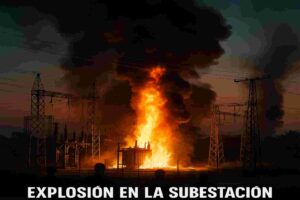
🇬🇧 EXPLOSION AT ELECTRICAL SUBSTATION IN CUBA
CCT Summary – August 31, 2025
1. GRAND LODGE OF CUBA RECEIVES RETURN OF FUNDS
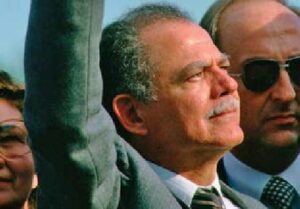
The Grand Lodge of Cuba received 1,000,000 CUP returned by former Grand Master Mario Urquía Carreño and former Treasurer Airam Cervera, following a complaint by current Grand Master Mayker Filema. Officials from the Ministry of the Interior, the Ministry of Justice, and the National Bank participated in the handover. An additional refund of 3,000,000 CUP is expected. The prior investigation revealed manipulation of bank statements, false invoices, and a discrepancy exceeding two million pesos, as well as an unexplained “theft” of 19,000 USD. Masons consulted suspect a maneuver to improve Filema’s image and seek lighter sanctions. A trial appears imminent.
Source: CubaNet.
2. DÍAZ-CANEL BEGINS TOUR OF ASIA
Miguel Díaz-Canel began a tour of Vietnam, China, and Laos, accompanied by Lis Cuesta, whose presence has reemerged after multiple recent trips. The government justified the agenda as a boost to cooperation, ongoing agreements, and the “Community of Shared Future” with China. Official figures highlight university, health, and agricultural agreements (e.g., with Belarus), though results remain opaque. Critics question the real impact as Cuba continues to face blackouts, shortages, and inflation. The tour adds to the long record of trips since 2018, while social media raises the recurring question: what has been concretely solved?
Source: CubitaNOW.
3. EXPLOSION IN GÜIRA DE MELENA SUBSTATION
An explosion at the Güira de Melena electrical substation (Artemisa) sparked a fire around 7:00 p.m., leaving much of the municipality without service. Witnesses reported a loud noise heard kilometers away, smoke columns, and flames spreading quickly. Firefighters extinguished the blaze after hours of work; no casualties were reported, though significant material damage occurred. Authorities are investigating causes: overload or possible intentional action, not yet confirmed. Prolonged blackouts are expected due to distribution damage. It occurs amid recurring outages fueling social discontent. The page “La Tijera” released the first images.
Source: CubitaNOW.
4. FOREIGN MINISTER DENIES DISAPPEARANCES AND TORTURE
Foreign Minister Bruno Rodríguez stated on X that the revolution eradicated disappearances and torture in Cuba, and that the “right to life” is at the center of its political system. Recent testimonies contradict this narrative: the detention and temporary disappearance of activist Yamilka Laffita (“Lara Crofs”), later released with an injury; assaults reported by writer Jorge Fernández Era; alerts over the forced disappearance of political prisoner Mario Alberto Hernández Leyva; and prior detentions of Oscar Elías Biscet and “Ktivo Disidente,” whose whereabouts were unknown for hours. The contrast between international discourse and domestic practices reveals persistent repression against opponents.
Source: Newspage SCB.
5. BUREAUCRACY BLOCKS CLEANUP OF ALMENDARES RIVER
A former director of Havana’s Metropolitan Park denounced bureaucratic obstacles and corruption that thwarted projects to clean up the Almendares River, despite partnerships with the Urban Institute of Canada and Oxfam. He described nearly zero oxygen levels, historic industrial discharges (Polar, paper mill, Coppelia), domestic waste, eutrophication, and heavy metals; scientific studies confirm more than 240 pollution sources. He criticized funds spent on trips and propaganda, and the Ejército Rebelde dam for reducing flow and filtering into karst terrain. He assured that without structural reforms, recovery is unfeasible.
Source: 14ymedio.
6. RELIGIOUS FREEDOM UNDER ATTACK IN SANTIAGO DE CUBA
In Santiago de Cuba, priest Rodhin A. Colomar denounced that authorities closed access to the Santa María Church and placed stages, tables, and even a public bathroom against the parish wall, blocking religious activities. He called it an assault on religious freedom and an act of harassment, since nearby alternatives existed for the event. Despite the blockade, the parish offered 258 free meals to the community. Colomar also recalled previous stone attacks that damaged the temple, without official response. The community remains firm in its humanitarian work.
Source: CiberCuba.
7. CHILD ABUSE CASES RISE IN MATANZAS
In Matanzas, hospitals reported four cases of child abuse in 2025, exceeding the three cases recorded in all of 2024. Among them, the death of a two-year-old boy in July after admission with physical violence and septic shock. Specialists denounce that many “accidents” conceal abuse or neglect. Pediatricians and psychologists warn that an abused child may become an abusive adult. Factors such as poverty, domestic violence, and stress worsen the situation. Although programs like Arcoiris exist, awareness and safe spaces remain lacking. Educational and community actions are urgently needed to break the cycle of violence.
Source: CubitaNOW.
8. TABACUBA REWARDS FARMERS WITH MERCEDES-BENZ
Tabacuba awarded six Mercedes-Benz cars to prominent tobacco farmers as a stimulus to production. However, the “reward” is paid by the producers themselves in MLC, a currency that devalues against the dollar. Out of about 300 invitees, only 20 accepted the offer. While it may seem advantageous compared to real vehicle costs, it reflects systemic inequity: farmers are paid in virtual MLC while the State collects dollars from exports. The measure seeks to retain foreign currency in farmers’ hands but has sparked criticism of favoritism and exploitation.
Source: 14ymedio.
9. SANDRO CASTRO SAYS HE HAS NO POLITICAL INTEREST
Sandro Castro, grandson of Fidel Castro, declared on the program “Gente Bonita” that he has no political interest, despite his surname. He said he is dedicated to social networks, where he has become a media figure. He admitted feeling proud of his family but insisted that politics “is not his thing.” Critics questioned him for enjoying privileges and visibility inaccessible to most Cubans. The interview sought to dispel perceptions but confirmed the public attention his surname attracts, a symbol of inherited privilege.
Source: CubitaNOW.
10. STATE MEDIA PRAISES OIL PRODUCTION
Caribbean Channel broadcast a report praising national oil production. It noted that Cupet reached two million tons of crude equivalent, with support from the Chinese company Great Wall and cooperation with Canada’s Sherritt. According to the outlet, Energas provides 12% of electricity demand. However, experts warn that production remains insufficient and most Cuban crude is low quality. The Electric Union forecasts deficits close to 2,000 MW, with constant blackouts. The official discourse of “energy sovereignty” contrasts with the severe crisis of the SEN.
Source: 14ymedio.
11. FIRE LEAVES GÜIRA DE MELENA IN DARKNESS
A fire at the 4,000 substation in Güira de Melena (Artemisa) left nearly the entire municipality without power on the night of August 30. Local authorities reported no casualties or damage to homes; firefighters put out the blaze and investigations are underway. While unaffected circuits are restored, state entities distributed food, coal, and fuel for generators, urging residents to “remain calm” without specifying a reconnection time. The episode follows recent failures in a key substation in Santa Clara that left much of the city without power. The already strained system, plagued by chronic deficits and lack of maintenance, also suffers extreme events that worsen instability.
Source: CubaNet.
12. FIRE DESTROYS HOMES AND BAR IN YAGUAJAY
A “medium-scale” fire affected the El Refugio bar-cafeteria and five adjacent homes in Yaguajay (Sancti Spíritus). No deaths were reported, according to Escambray newspaper cited by independent media. The fire began Sunday night and mobilized the local Fire Department with reinforcements from Sancti Spíritus and Cabaiguán. The greatest losses occurred in the bar and three homes, with total damage to roofs and old wooden structures. A commission was created to evaluate damages and provide temporary housing to one of the affected families. Neighbors helped prevent the spread, working from rooftops. Authorities are investigating the cause; for now, efforts focus on property protection and assistance to victims.
Source: CubaNet.
13. UNPACU REJECTS “TERRORISM” LABEL
The Patriotic Union of Cuba (UNPACU) sent an open letter to the Government demanding removal from the Ministry of the Interior’s Resolution 19/2023, which classifies it as linked to terrorism, and called for the release of its leader, José Daniel Ferrer. The organization denounced the accusation as “political manipulation” and defended its civic and nonviolent character, citing humanitarian work and civic education. It also denounced torture, isolation, and denial of medical care to Ferrer, demanding respect for due process. The letter contrasts the State’s accusation with the historic glorification of armed actions such as the Moncada assault. The case highlights again the plight of political prisoners and international standards on civil rights in Cuba.
Source: CubaNet.
14. CBP DEPORTS CUBAN CONVICTED OF HUMAN TRAFFICKING
The U.S. Customs and Border Protection announced the deportation of a Cuban citizen convicted in 2024 for attempting to traffic 29 people — including minors — in the back of a trailer. The destination was not specified; Washington has recently relied on “third countries” when Cuba refuses to receive nationals with criminal records. The measure is part of a tougher policy against traffickers and violent repeat offenders, with precedents of expulsions to Eswatini or South Sudan. Human rights organizations warn of possible legal and humanitarian risks of this practice, especially where migrants face no guarantees.
Source: CubaNet.
15. UNITED AIRLINES SUSPENDS HOUSTON–HAVANA ROUTE
United Airlines announced it will temporarily suspend its only regular flight to Cuba due to “off-season demand volatility” and a tighter regulatory environment. The pause affects the Houston–Havana connection on Boeing 737-800 aircraft. The company plans to resume in the summer of 2026 if the DOT grants flexibility to keep the rights. The move follows similar adjustments by other airlines: American has requested to suspend Miami–Santiago, and Southwest will reduce Tampa–Havana. The market remains highly seasonal and limited by permitted travel categories, costs, and bureaucracy.
Source: CubaNet.
16. SOUTHWEST REDUCES TAMPA–HAVANA TO ONE FLIGHT
Southwest requested to reduce its Tampa–Havana route from two daily flights to one between September 4, 2025, and March 2026, citing low demand and capacity needs. The decision affects families who rely on this connection for visits and remittances and adds to other cuts (United and American). The stricter regulatory environment and shrinking demand make Cuba routes less profitable, despite authorized categories (family, educational, humanitarian).
Source: CiberCuba.
17. ETECSA SHUTS DOWN 67% OF MOBILE NETWORK
The state company interrupted mobile phone service for lines representing nearly 67% of its base between midnight and 6:00 a.m. on August 29, citing “modernization” work. Users of Alternative Fixed Telephony were also affected. ETECSA did not announce compensation or immediate improvements, claiming the change will allow, in the future, new services such as line changes, transfers, call forwarding, or voicemail. The outage comes amid public discontent over the “rate hike,” poor service quality, internet crashes, and the elimination of accumulated minutes/SMS, which have triggered student protests and demands for transparency.
Source: CubaNet.
18. TEACHER SHORTAGE IN SANCTI SPÍRITUS
Provincial authorities confirmed that the school year will start with only 68% of teaching positions filled. The shortage forces adjustments: more multigrade classes, heavier workloads for active teachers, and the use of unqualified staff in key classrooms. The deficit stems from depreciated wages, migration, and unfilled vacancies. The situation revives debate over education quality, regional inequality, and the need for specific incentives to attract and retain teachers in disadvantaged areas.
Source: CubaNet.
19. DENGUE TRANSMISSION IN 11 PROVINCES
A recent Ministry of Public Health report admitted active dengue transmission in 11 provinces and reported at least five patients in serious condition, while downplaying the situation. The update omitted clarification on the death of a minor allegedly from hemorrhagic dengue, drawing criticism for lack of transparency. With heavy rains and heat, experts warn of persistent outbreak risks, especially in neighborhoods with poor garbage collection and stagnant water. Authorities call for vigilance, but citizens denounce shortages of repellents, larvicides, and systematic fumigation.
Source: Diario de Cuba.
🇫🇷 EXPLOSION DANS UNE SOUS-STATION ÉLECTRIQUE À CUBA
Résumé de CCT – 31 août 2025
1. LA GRANDE LOGE DE CUBA REÇOIT LE REMBOURSEMENT DE FONDS
La Grande Loge de Cuba a reçu 1 000 000 CUP restitués par l’ancien Grand Maître Mario Urquía Carreño et l’ancien Trésorier Airam Cervera, à la suite d’une plainte du Grand Maître actuel, Mayker Filema. Des fonctionnaires du ministère de l’Intérieur, du ministère de la Justice et de la Banque nationale ont participé à la remise. Un remboursement supplémentaire de 3 000 000 CUP est attendu. L’enquête préalable a révélé une manipulation des relevés bancaires, de fausses factures et un écart supérieur à deux millions de pesos, ainsi qu’un “vol” inexpliqué de 19 000 USD. Des francs-maçons consultés soupçonnent une manœuvre pour améliorer l’image de Filema et obtenir des sanctions plus légères. Un procès serait imminent.
Source : CubaNet.
2. DÍAZ-CANEL COMMENCE UNE TOURNÉE EN ASIE
Miguel Díaz-Canel a entamé une tournée au Vietnam, en Chine et au Laos, accompagné de Lis Cuesta, dont la présence est réapparue après plusieurs voyages récents. Le gouvernement a justifié l’agenda comme un élan de coopération, d’accords en cours et de “Communauté de destin partagé” avec la Chine. Les chiffres officiels mettent en avant des accords universitaires, sanitaires et agricoles (par ex. avec la Biélorussie), bien que les résultats restent opaques. Les critiques remettent en question l’impact réel alors que Cuba continue de subir des coupures de courant, des pénuries et de l’inflation. La tournée s’ajoute au long historique de voyages depuis 2018, tandis que les réseaux sociaux posent la question récurrente : qu’a-t-on résolu concrètement ?
Source : CubitaNOW.
3. EXPLOSION DANS UNE SOUS-STATION À GÜIRA DE MELENA
Une explosion à la sous-station électrique de Güira de Melena (Artemisa) a provoqué un incendie vers 19 h, laissant une grande partie de la municipalité sans service. Des témoins ont signalé une forte détonation entendue à plusieurs kilomètres, des colonnes de fumée et des flammes se propageant rapidement. Les pompiers ont éteint l’incendie après plusieurs heures d’efforts ; aucune victime n’a été signalée, mais d’importants dégâts matériels ont eu lieu. Les autorités enquêtent sur les causes : surcharge ou possible action intentionnelle, non confirmée. Des coupures prolongées sont attendues en raison des dommages de distribution. Cela se produit dans un contexte de pannes récurrentes alimentant le mécontentement social. La page “La Tijera” a diffusé les premières images.
Source : CubitaNOW.
4. LE MINISTRE DES AFFAIRES ÉTRANGÈRES NIE LES DISPARITIONS ET LA TORTURE
Le ministre des Affaires étrangères, Bruno Rodríguez, a déclaré sur X que la révolution avait éradiqué les disparitions et la torture à Cuba et que le “droit à la vie” était au centre de son système politique. Des témoignages récents contredisent ce discours : la détention et la disparition temporaire de l’activiste Yamilka Laffita (“Lara Crofs”), libérée plus tard avec une blessure ; les agressions signalées par l’écrivain Jorge Fernández Era ; l’alerte sur la disparition forcée du prisonnier politique Mario Alberto Hernández Leyva ; et les détentions antérieures d’Oscar Elías Biscet et de “Ktivo Disidente”, dont le sort est resté inconnu pendant des heures. Le contraste entre discours international et pratiques internes révèle une répression persistante contre les opposants.
Source : Newspage SCB.
5. LA BUREAUCRATIE BLOQUE L’ASSAINISSEMENT DE LA RIVIÈRE ALMENDARES
Un ancien directeur du Parc Métropolitain de La Havane a dénoncé des obstacles bureaucratiques et la corruption qui ont contrecarré les projets de dépollution de la rivière Almendares, malgré des partenariats avec l’Institut Urbain du Canada et Oxfam. Il a décrit des niveaux d’oxygène quasi nuls, des rejets industriels historiques (Polar, papeterie, Coppelia), des eaux usées domestiques, l’eutrophisation et les métaux lourds ; des études scientifiques confirment plus de 240 sources de pollution. Il a critiqué les fonds dépensés en voyages et en propagande, ainsi que le barrage Ejército Rebelde pour avoir réduit le débit et filtré dans un terrain karstique. Selon lui, sans réformes structurelles, le sauvetage est irréalisable.
Source : 14ymedio.
6. LA LIBERTÉ RELIGIEUSE ATTAQUÉE À SANTIAGO DE CUBA
À Santiago de Cuba, le prêtre Rodhin A. Colomar a dénoncé que les autorités avaient fermé l’accès à l’église Santa María et installé des scènes, des tables et même des toilettes publiques contre le mur paroissial, empêchant les activités religieuses. Il a qualifié cela d’atteinte à la liberté religieuse et d’acte de harcèlement, alors qu’il existait des alternatives proches pour l’événement. Malgré le blocus, la paroisse a offert 258 repas gratuits à la communauté. Colomar a également rappelé des attaques précédentes à coups de pierres qui avaient endommagé le temple, sans réponse officielle. La communauté reste ferme dans son travail humanitaire.
Source : CiberCuba.
7. LES CAS DE MALTRAITANCE D’ENFANTS AUGMENTENT À MATANZAS
À Matanzas, les hôpitaux ont signalé quatre cas de maltraitance d’enfants en 2025, dépassant les trois cas enregistrés pour toute l’année 2024. Parmi eux, la mort d’un garçon de deux ans en juillet après avoir été admis pour violences physiques et choc septique. Des spécialistes dénoncent que de nombreux “accidents” dissimulent des abus ou de la négligence. Des pédiatres et des psychologues avertissent qu’un enfant maltraité peut devenir un adulte maltraitant. Des facteurs tels que la pauvreté, la violence familiale et le stress aggravent la situation. Bien que des programmes comme Arcoiris existent, la sensibilisation et les espaces sûrs restent insuffisants. Des actions éducatives et communautaires sont urgemment nécessaires pour briser le cycle de la violence.
Source : CubitaNOW.
8. TABACUBA RÉCOMPENSE LES PRODUCTEURS AVEC DES MERCEDES-BENZ
Tabacuba a remis six Mercedes-Benz à des planteurs de tabac en guise de stimulus à la production. Toutefois, la “récompense” est payée par les producteurs eux-mêmes en MLC, une monnaie qui se dévalue face au dollar. Sur environ 300 invités, seuls 20 ont accepté l’offre. Bien que cela puisse sembler avantageux comparé au coût réel des véhicules, cela reflète une iniquité systémique : les planteurs sont payés en MLC virtuel tandis que l’État encaisse des dollars grâce aux exportations. La mesure vise à retenir les devises chez les paysans, mais elle suscite des critiques sur le favoritisme et l’exploitation.
Source : 14ymedio.
9. SANDRO CASTRO AFFIRME NE PAS AVOIR D’INTÉRÊT POLITIQUE
Sandro Castro, petit-fils de Fidel Castro, a déclaré dans l’émission “Gente Bonita” qu’il n’avait aucun intérêt politique, malgré son nom de famille. Il a affirmé se consacrer aux réseaux sociaux, où il est devenu une figure médiatique. Il a reconnu être fier de sa famille, mais a insisté sur le fait que la politique “n’est pas son domaine”. Des critiques l’ont remis en question pour bénéficier de privilèges et d’une visibilité inaccessibles à la majorité des Cubains. L’interview visait à dissiper certaines perceptions mais a confirmé l’attention publique que suscite son nom, symbole de privilèges hérités.
Source : CubitaNOW.
10. LES MÉDIAS D’ÉTAT LOUENT LA PRODUCTION DE PÉTROLE
Canal Caribe a diffusé un reportage exaltant la production pétrolière nationale. Il a indiqué que Cupet avait atteint deux millions de tonnes de brut équivalent, avec le soutien de la société chinoise Grande Muraille et la coopération avec la société canadienne Sherritt. Selon le média, Energas fournit 12 % de la demande électrique. Cependant, des experts avertissent que la production reste insuffisante et que la majorité du brut cubain est de faible qualité. L’Union Électrique prévoit des déficits proches de 2 000 MW, avec des coupures constantes. Le discours officiel de “souveraineté énergétique” contraste avec la grave crise du SEN.
Source : 14ymedio.
11. INCENDIE LAISSE GÜIRA DE MELENA DANS LE NOIR
Un incendie dans la sous-station 4 000 de Güira de Melena (Artemisa) a laissé presque toute la municipalité sans électricité dans la nuit du 30 août. Les autorités locales ont signalé qu’il n’y avait pas eu de victimes ni de dommages aux habitations ; les pompiers ont éteint le feu et une enquête est en cours. Pendant que les circuits non touchés sont rétablis, les entités étatiques ont distribué de la nourriture, du charbon et du carburant pour les générateurs, demandant aux habitants de “rester calmes” sans préciser d’heure de reconnexion. L’épisode survient après des pannes récentes dans une sous-station clé de Santa Clara, qui avait laissé une grande partie de la ville sans courant. Le système, déjà fragilisé par un déficit chronique et un manque d’entretien, subit aussi des événements extrêmes qui aggravent l’instabilité.
Source : CubaNet.
12. INCENDIE DÉTRUIT DES MAISONS ET UN BAR À YAGUAJAY
Un incendie de “moyenne ampleur” a touché le bar-cafétéria El Refugio et cinq maisons adjacentes à Yaguajay (Sancti Spíritus). Aucun décès n’a été signalé, selon le journal Escambray cité par des médias indépendants. L’incendie a débuté dimanche soir et a mobilisé les pompiers locaux, avec des renforts de Sancti Spíritus et de Cabaiguán. Les plus grandes pertes se sont concentrées sur l’établissement gastronomique et trois maisons, avec des dégâts totaux aux toits et aux structures anciennes en bois. Une commission a été créée pour évaluer les dommages et reloger temporairement une des familles affectées. Les voisins ont aidé à empêcher la propagation en travaillant depuis les toits. Les autorités enquêtent sur la cause ; pour l’instant, l’accent est mis sur la protection des biens et l’assistance aux sinistrés.
Source : CubaNet.
13. L’UNPACU REJETTE L’ÉTIQUETTE DE “TERRORISME”
L’Union Patriotique de Cuba (UNPACU) a adressé une lettre ouverte au gouvernement pour exiger son retrait de la Résolution 19/2023 du MININT, qui la classe comme liée au terrorisme, et pour réclamer la libération de son dirigeant, José Daniel Ferrer. L’organisation qualifie l’accusation de “manipulation politique” et défend son caractère civique et non violent, citant des actions humanitaires et de formation citoyenne. Elle dénonce aussi des tortures, l’isolement et le refus de soins médicaux à Ferrer, et exige le respect du droit à un procès équitable. La lettre oppose l’accusation étatique à la glorification historique d’actions armées comme l’assaut de la Moncada. L’affaire met de nouveau en lumière la situation des prisonniers politiques et les normes internationales relatives aux droits civils à Cuba.
Source : CubaNet.
14. LA CBP EXPULSE UN CUBAIN CONDAMNÉ POUR TRAFIC HUMAIN
L’Agence américaine des Douanes et de la Protection des Frontières (CBP) a annoncé l’expulsion d’un citoyen cubain condamné en 2024 pour avoir tenté de faire passer 29 personnes — dont des mineurs — dans la remorque d’un camion. La destination n’a pas été précisée ; Washington a récemment eu recours à des “pays tiers” lorsque Cuba refuse de recevoir des nationaux au casier judiciaire chargé. La mesure s’inscrit dans une politique plus ferme contre les trafiquants et les récidivistes violents, avec des précédents d’expulsions vers l’Eswatini ou le Soudan du Sud. Des organisations de défense des droits humains alertent sur les risques juridiques et humanitaires de cette pratique, surtout lorsque le statut migratoire n’offre pas de garanties.
Source : CubaNet.
15. UNITED AIRLINES SUSPEND LA LIAISON HOUSTON–LA HAVANE
United Airlines a annoncé la suspension temporaire de son unique vol régulier vers Cuba, invoquant la “volatilité de la demande hors saison” et un environnement réglementaire plus strict. La pause concerne la liaison Houston–La Havane opérée avec des Boeing 737-800. La compagnie prévoit une reprise à l’été 2026 si le Département des Transports lui accorde de la flexibilité pour conserver ses droits. Ce recul s’ajoute aux ajustements d’autres compagnies : American a demandé à suspendre Miami–Santiago et Southwest réduira Tampa–La Havane. Le marché reste fortement saisonnier et limité par les catégories de voyage autorisées, les coûts et les formalités.
Source : CubaNet.
16. SOUTHWEST RÉDUIT TAMPA–LA HAVANE À UN VOL QUOTIDIEN
Southwest a sollicité auprès du Département des Transports des États-Unis la réduction de deux à un vol quotidien de sa route Tampa–La Havane, du 4 septembre 2025 à mars 2026, invoquant une faible demande et le besoin de réaffecter sa capacité. La décision affecte les familles dépendant de cette connexion pour les visites et les envois, et s’ajoute à d’autres coupes (United et American). L’environnement réglementaire plus strict et la contraction de la demande rendent les routes vers Cuba moins rentables, malgré les catégories de voyage autorisées (familial, éducatif, humanitaire).
Source : CiberCuba.
17. L’ETECSA INTERROMPT 67 % DU RÉSEAU MOBILE
L’entreprise d’État a interrompu le service de téléphonie mobile pour des lignes représentant près de 67 % de sa base, entre minuit et 6 h du matin le 29 août, invoquant des travaux de “modernisation”. Les utilisateurs de la Téléphonie Fixe Alternative ont aussi été affectés. L’ETECSA n’a annoncé ni compensations ni améliorations immédiates, défendant que le changement permettrait, à l’avenir, de nouvelles gestions telles que changement de ligne ou de titulaire, et des services comme le renvoi d’appel ou la messagerie vocale. La coupure survient dans un contexte de rejet du “tarifazo” et de plaintes concernant la qualité/prix, les pannes d’internet et la suppression des minutes/SMS accumulés, ce qui a provoqué des protestations étudiantes et des appels à la transparence.
Source : CubaNet.
18. MANQUE D’ENSEIGNANTS À SANCTI SPÍRITUS
Les autorités provinciales ont confirmé que la rentrée scolaire se ferait avec seulement 68 % des postes d’enseignants couverts. Le déficit oblige à des réajustements : augmentation des classes multigrades, charge accrue pour les enseignants en activité et recours à du personnel non qualifié dans des matières clés. La carence s’explique par des salaires dépréciés, la migration interne et externe des professionnels et le volume de départs non compensés. Le scénario relance le débat sur la qualité éducative, les inégalités territoriales et la nécessité de mesures incitatives spécifiques pour attirer et retenir les enseignants dans les zones défavorisées.
Source : CubaNet.
19. DENGUE AVEC TRANSMISSION ACTIVE DANS 11 PROVINCES
Un rapport récent du ministère de la Santé publique admet une transmission active de la dengue dans 11 provinces et rapporte au moins cinq patients dans un état grave, tout en minimisant la gravité de la situation. La mise à jour n’a pas clarifié la mort d’un mineur supposément due à une dengue hémorragique, ce qui a suscité des critiques pour manque de transparence. Avec des pluies et une chaleur persistantes, des experts avertissent que le risque d’épidémies demeure, surtout dans les quartiers où la collecte des déchets et l’assainissement des eaux stagnantes sont déficients. Les autorités appellent à une vigilance accrue, mais la population dénonce le manque de répulsifs, de larvicides et de fumigations systématiques.
Source : Diario de Cuba.
🇮🇹 ESPLOSIONE IN UNA SOTTOSTAZIONE ELETTRICA A CUBA
Riepilogo di CCT – 31 agosto 2025
1. LA GRAN LOGGIA DI CUBA RICEVE LA RESTITUZIONE DEI FONDI
La Gran Loggia di Cuba ha ricevuto 1.000.000 CUP restituiti dall’ex Gran Maestro Mario Urquía Carreño e dall’ex Tesoriere Airam Cervera, a seguito di una denuncia dell’attuale Gran Maestro, Mayker Filema. Alla consegna hanno partecipato funzionari del Ministero dell’Interno, del Ministero della Giustizia e della Banca Nazionale. È previsto un ulteriore rimborso di 3.000.000 CUP. L’indagine preliminare ha rilevato manipolazioni di estratti conto, fatture false e una discrepanza superiore a due milioni di pesos, oltre a un “furto” inspiegabile di 19.000 USD. Massoni consultati sospettano una manovra per migliorare l’immagine di Filema e ottenere sanzioni più lievi. Un processo sarebbe imminente.
Fonte: CubaNet.
2. DÍAZ-CANEL INIZIA UN TOUR IN ASIA
Miguel Díaz-Canel ha iniziato un tour in Vietnam, Cina e Laos, accompagnato da Lis Cuesta, la cui presenza è riemersa dopo diversi viaggi recenti. Il governo ha giustificato l’agenda come un impulso alla cooperazione, agli accordi in corso e alla “Comunità di Futuro Condiviso” con la Cina. I dati ufficiali mostrano accordi universitari, sanitari e agricoli (ad es. con la Bielorussia), anche se i risultati rimangono opachi. I critici mettono in dubbio l’impatto reale mentre Cuba continua ad affrontare blackout, carenze e inflazione. Il tour si aggiunge alla lunga serie di viaggi dal 2018, mentre sui social cresce la domanda ricorrente: cosa è stato risolto concretamente?
Fonte: CubitaNOW.
3. ESPLOSIONE NELLA SOTTOSTAZIONE DI GÜIRA DE MELENA
Un’esplosione nella sottostazione elettrica di Güira de Melena (Artemisa) ha provocato un incendio intorno alle 19:00, lasciando gran parte del municipio senza servizio. Testimoni hanno riferito di un forte boato udito a chilometri di distanza, colonne di fumo e fiamme che si diffondevano rapidamente. I vigili del fuoco hanno domato l’incendio dopo ore di lavoro; non sono state riportate vittime, ma si sono verificati ingenti danni materiali. Le autorità stanno indagando sulle cause: sovraccarico o possibile azione intenzionale, non ancora confermata. Sono previsti blackout prolungati a causa dei danni alla distribuzione. L’episodio avviene in un contesto di interruzioni ricorrenti che alimentano il malcontento sociale. La pagina “La Tijera” ha diffuso le prime immagini.
Fonte: CubitaNOW.
4. IL MINISTRO DEGLI ESTERI NEGA SPARIZIONI E TORTURE
Il ministro degli Esteri, Bruno Rodríguez, ha dichiarato su X che la rivoluzione ha eliminato le sparizioni e le torture a Cuba e che il “diritto alla vita” è al centro del suo sistema politico. Testimonianze recenti contraddicono questa narrazione: la detenzione e la temporanea sparizione dell’attivista Yamilka Laffita (“Lara Crofs”), poi rilasciata con una lesione; le aggressioni denunciate dallo scrittore Jorge Fernández Era; l’allerta per la sparizione forzata del prigioniero politico Mario Alberto Hernández Leyva; e le precedenti detenzioni di Oscar Elías Biscet e “Ktivo Disidente”, il cui destino è rimasto ignoto per ore. Il contrasto tra il discorso internazionale e le pratiche interne rivela una repressione persistente contro gli oppositori.
Fonte: Newspage SCB.
5. BUROCRAZIA BLOCCA IL RISANAMENTO DEL FIUME ALMENDARES
Un ex direttore del Parco Metropolitano dell’Avana ha denunciato ostacoli burocratici e corruzione che hanno frustrato progetti per bonificare il fiume Almendares, nonostante collaborazioni con l’Istituto Urbano del Canada e Oxfam. Ha descritto livelli di ossigeno quasi nulli, scarichi industriali storici (Polar, cartiera, Coppelia), scarichi domestici, eutrofizzazione e metalli pesanti; studi scientifici confermano oltre 240 fonti di inquinamento. Ha criticato i fondi spesi in viaggi e propaganda e la diga Ejército Rebelde per aver ridotto il flusso e filtrato nel terreno carsico. Ha assicurato che senza riforme strutturali, il recupero è irrealizzabile.
Fonte: 14ymedio.
6. LA LIBERTÀ RELIGIOSA SOTTO ATTACCO A SANTIAGO DE CUBA
A Santiago de Cuba, il sacerdote Rodhin A. Colomar ha denunciato che le autorità hanno chiuso l’accesso alla chiesa di Santa María e hanno collocato palchi, tavoli e persino un bagno pubblico contro il muro parrocchiale, impedendo le attività religiose. Ha definito l’atto un attacco alla libertà religiosa e un atto di assedio, poiché esistevano alternative vicine per celebrare l’evento. Nonostante il blocco, la parrocchia ha offerto 258 pranzi gratuiti alla comunità. Colomar ha anche ricordato precedenti attacchi con pietre che hanno danneggiato il tempio, senza risposta ufficiale. La comunità resta ferma nel suo lavoro umanitario.
Fonte: CiberCuba.
7. AUMENTANO I CASI DI MALTRATTAMENTO INFANTILE A MATANZAS
A Matanzas, gli ospedali hanno segnalato quattro casi di maltrattamento infantile nel 2025, superando i tre registrati in tutto il 2024. Tra questi, la morte di un bambino di due anni a luglio dopo il ricovero per violenza fisica e shock settico. Gli specialisti denunciano che molti “incidenti” nascondono abusi o negligenze. Pediatri e psicologi avvertono che un bambino maltrattato può diventare un adulto maltrattatore. Fattori come povertà, violenza familiare e stress aggravano la situazione. Sebbene esistano programmi come Arcoiris, mancano ancora consapevolezza sociale e spazi sicuri. Sono necessarie urgentemente azioni educative e comunitarie per spezzare il ciclo della violenza.
Fonte: CubitaNOW.
8. TABACUBA PREMIA I CONTADINI CON MERCEDES-BENZ
Tabacuba ha consegnato sei Mercedes-Benz a coltivatori di tabacco di spicco come incentivo alla produzione. Tuttavia, il “premio” è pagato dagli stessi produttori in MLC, una valuta che si svaluta rispetto al dollaro. Su circa 300 invitati, solo 20 hanno accettato l’offerta. Anche se può sembrare un vantaggio rispetto al costo reale dei veicoli, riflette l’iniquità del sistema: i coltivatori vengono pagati in MLC virtuale mentre lo Stato incassa dollari dalle esportazioni. La misura mira a trattenere valuta estera nelle mani dei contadini, ma suscita critiche su favoritismi ed esploitazione.
Fonte: 14ymedio.
9. SANDRO CASTRO DICHIARA DI NON AVERE INTERESSI POLITICI
Sandro Castro, nipote di Fidel Castro, ha dichiarato nel programma “Gente Bonita” di non avere alcun interesse politico, nonostante il suo cognome. Ha detto di dedicarsi ai social network, dove è diventato una figura mediatica. Ha ammesso di sentirsi orgoglioso della sua famiglia, ma ha insistito sul fatto che la politica “non fa per lui”. I critici lo hanno contestato per godere di privilegi e visibilità inaccessibili alla maggioranza dei cubani. L’intervista mirava a dissipare percezioni, ma ha confermato l’attenzione pubblica che suscita il suo cognome, simbolo di privilegi ereditati.
Fonte: CubitaNOW.
10. I MEDIA DI STATO ESALTANO LA PRODUZIONE DI PETROLIO
Canal Caribe ha trasmesso un reportage esaltando la produzione petrolifera nazionale. Ha sottolineato che Cupet ha raggiunto due milioni di tonnellate di greggio equivalente, con il supporto della società cinese Grande Muraglia e la cooperazione con la canadese Sherritt. Secondo il canale, Energas fornisce il 12% della domanda elettrica. Tuttavia, esperti avvertono che la produzione resta insufficiente e che la maggior parte del greggio cubano è di bassa qualità. L’Unione Elettrica prevede deficit vicini a 2.000 MW, con blackout costanti. Il discorso ufficiale sulla “sovranità energetica” contrasta con la grave crisi del SEN.
Fonte: 14ymedio.
11. INCENDIO LASCIA GÜIRA DE MELENA AL BUIO
Un incendio nella sottostazione 4.000 di Güira de Melena (Artemisa) ha lasciato quasi tutto il municipio senza elettricità la notte del 30 agosto. Le autorità locali hanno riferito che non ci sono state vittime né danni alle abitazioni; i vigili del fuoco hanno domato l’incendio e sono in corso indagini. Mentre si ripristinano i circuiti non danneggiati, le entità statali hanno distribuito cibo, carbone e carburante per i generatori, chiedendo alla popolazione di “mantenere la calma” senza specificare un orario di riconnessione. L’episodio segue recenti guasti in una sottostazione chiave di Santa Clara, che avevano lasciato gran parte della città senza corrente. Il sistema, già in crisi per deficit cronico e mancanza di manutenzione, soffre anche eventi estremi che peggiorano l’instabilità.
Fonte: CubaNet.
12. INCENDIO DISTRUGGE CASE E UN BAR A YAGUAJAY
Un incendio di “media entità” ha colpito il bar-caffetteria El Refugio e cinque case adiacenti a Yaguajay (Sancti Spíritus). Non ci sono state vittime, secondo il giornale Escambray citato da media indipendenti. L’incendio è iniziato domenica sera e ha mobilitato i vigili del fuoco locali, con rinforzi da Sancti Spíritus e Cabaiguán. Le maggiori perdite si sono concentrate nel locale gastronomico e in tre case, con danni totali a tetti e strutture antiche in legno. È stata creata una commissione per valutare i danni e ospitare temporaneamente una delle famiglie colpite. I vicini hanno collaborato per impedire la propagazione, lavorando dai tetti. Le autorità indagano sulle cause; per ora si dà priorità alla protezione dei beni e all’assistenza agli sfollati.
Fonte: CubaNet.
13. L’UNPACU RESPINGE L’ETICHETTA DI “TERRORISMO”
L’Unione Patriottica di Cuba (UNPACU) ha inviato una lettera aperta al governo chiedendo di essere rimossa dalla Risoluzione 19/2023 del MININT, che la etichetta come legata al terrorismo, e reclamando la liberazione del suo leader, José Daniel Ferrer. L’organizzazione definisce l’accusa una “manipolazione politica” e rivendica il suo carattere civico e non violento, citando attività umanitarie e di formazione civica. Denuncia inoltre torture, isolamento e negazione di cure mediche a Ferrer, chiedendo il rispetto del giusto processo. La lettera contrappone l’accusa statale alla glorificazione storica di azioni armate come l’assalto al Moncada. Il caso riporta in primo piano la situazione dei prigionieri politici e gli standard internazionali sui diritti civili nell’isola.
Fonte: CubaNet.
14. LA CBP DEPORTA UN CUBANO CONDANNATO PER TRAFFICO DI PERSONE
La U.S. Customs and Border Protection ha annunciato la deportazione di un cittadino cubano condannato nel 2024 per aver tentato di trafficare 29 persone — inclusi minori — nella parte posteriore di un camion. La destinazione non è stata specificata; Washington ha recentemente fatto ricorso a “paesi terzi” quando Cuba rifiuta di accogliere cittadini con precedenti penali. La misura fa parte di una politica più dura contro trafficanti e recidivi violenti, con precedenti di espulsioni verso Eswatini o Sudan del Sud. Organizzazioni per i diritti umani avvertono dei possibili rischi legali e umanitari di questa pratica, soprattutto dove lo status migratorio non offre garanzie.
Fonte: CubaNet.
15. UNITED AIRLINES SOSPENDE LA ROTTA HOUSTON–L’AVANA
United Airlines ha annunciato la sospensione temporanea del suo unico volo regolare per Cuba, a causa della “volatilità della domanda fuori stagione” e di un contesto normativo più rigido. La sospensione riguarda la tratta Houston–L’Avana operata con Boeing 737-800. La compagnia prevede di riprendere nell’estate del 2026 se il DOT concederà flessibilità per mantenere i diritti. La decisione segue simili aggiustamenti di altre compagnie: American ha chiesto di sospendere la rotta Miami–Santiago e Southwest ridurrà Tampa–L’Avana. Il mercato rimane fortemente stagionale e limitato dalle categorie di viaggio consentite, dai costi e dalla burocrazia.
Fonte: CubaNet.
16. SOUTHWEST RIDUCE TAMPA–L’AVANA A UN VOLO GIORNALIERO
Southwest ha chiesto al Dipartimento dei Trasporti USA di ridurre da due a un volo giornaliero la rotta Tampa–L’Avana, dal 4 settembre 2025 a marzo 2026, citando bassa domanda e necessità di riallocare capacità. La decisione colpisce le famiglie che dipendono da questa connessione per visite e rimesse e si aggiunge ad altri tagli (United e American). L’ambiente normativo più restrittivo e la contrazione della domanda rendono meno redditizie le rotte verso Cuba, nonostante le categorie autorizzate (familiari, educative, umanitarie).
Fonte: CiberCuba.
17. ETECSA INTERROMPE IL 67% DELLA RETE MOBILE
L’azienda statale ha interrotto il servizio di telefonia mobile per linee che rappresentano quasi il 67% della sua base, tra la mezzanotte e le 6:00 del 29 agosto, invocando lavori di “modernizzazione”. Anche gli utenti della Telefonia Fissa Alternativa sono stati colpiti. L’ETECSA non ha annunciato compensazioni né miglioramenti immediati; ha difeso la misura affermando che in futuro consentirà nuove gestioni come cambio di linea o titolarità, e servizi come deviazione di chiamata o segreteria telefonica. L’interruzione avviene in un contesto di proteste contro il “tarifazo” e di lamentele per qualità/prezzo, cadute di internet ed eliminazione di minuti/SMS accumulati, che hanno provocato manifestazioni studentesche e richieste di trasparenza.
Fonte: CubaNet.
18. CARENZA DI INSEGNANTI A SANCTI SPÍRITUS
Le autorità provinciali hanno confermato che l’anno scolastico inizierà con poco più del 68% dei posti di insegnanti coperti. La carenza costringe a riadattamenti: aumento delle classi multigrado, maggior carico per i docenti in servizio e uso di personale non specializzato in materie chiave. La situazione si spiega con salari svalutati, migrazione interna ed esterna e numero di abbandoni non compensati. Lo scenario riapre il dibattito sulla qualità educativa, le disuguaglianze territoriali e la necessità di incentivi specifici per attrarre e trattenere docenti nelle zone più svantaggiate.
Fonte: CubaNet.
19. DENGUE CON TRASMISSIONE ATTIVA IN 11 PROVINCE
Un recente rapporto del Ministero della Salute Pubblica ha ammesso la trasmissione attiva di dengue in 11 province e segnalato almeno cinque pazienti in condizioni gravi, pur minimizzando la gravità della situazione. L’aggiornamento non ha chiarito la morte di un minore presumibilmente per dengue emorragico, suscitando critiche per mancanza di trasparenza. Con piogge e caldo persistenti, esperti avvertono che il rischio di focolai rimane, specialmente nei quartieri con scarsa raccolta dei rifiuti e acque stagnanti. Le autorità invitano alla vigilanza, ma la popolazione denuncia carenze di repellenti, larvicidi e fumigazioni sistematiche.
Fonte: Diario de Cuba.




Deja tu comentario